From local campuses to regional infrastructure, Rockland Audubon works with partners to reduce human-caused threats to birds. Our impact spans both the built environment and the night sky, using practical, science-based solutions that can be replicated across the region.
Bird-Safe Buildings: Windows That Save Birds
Bird-Safe Windows at Lamont-Doherty Earth Observatory
Each year, hundreds of millions of birds in the United States are killed after colliding with glass. Reflections of trees and sky can make windows appear invisible to birds, particularly during spring and fall migration seasons when birds are traveling at night and navigating unfamiliar landscapes.
To help address this common but often overlooked conservation issue, Rockland Audubon Society partnered with Lamont-Doherty Earth Observatory on a bird-safe window pilot project at Lamont’s campus in Palisades, New York.
A Natural Partnership
Lamont-Doherty’s campus sits within a forested corridor along the Hudson River, a major migratory flyway, where research buildings are closely integrated with surrounding trees and natural habitat. This setting makes bird-safe design especially relevant and creates an opportunity to demonstrate how simple, proven solutions can reduce bird collisions in real-world conditions.
As a science-driven institution with a strong public education mission, Lamont is also well positioned to help share what works and support broader awareness of bird-friendly building practices.
Phase 1: Monell Building Installation
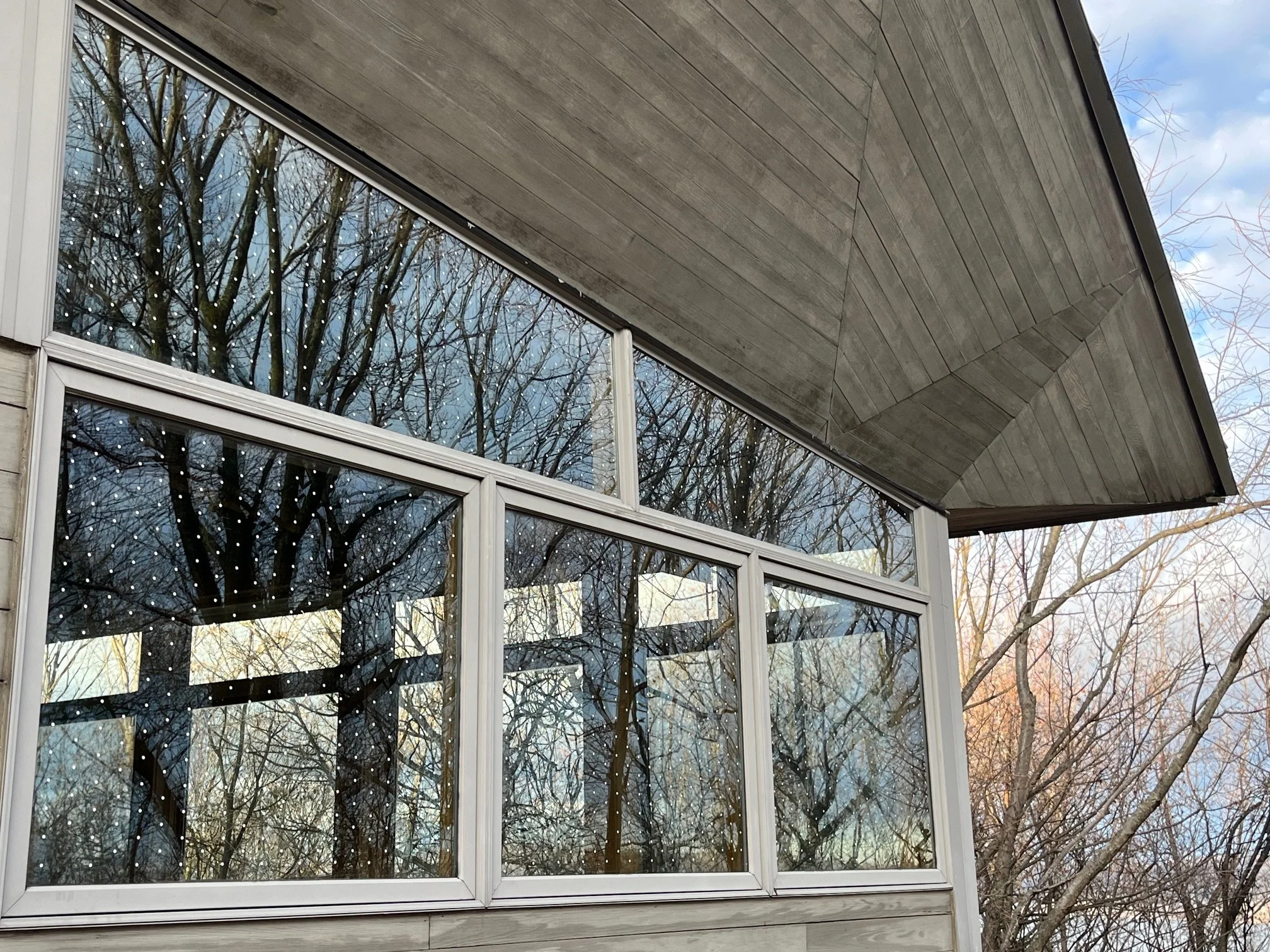
Feather Friendly® markers applied to exterior glass at Lamont-Doherty’s Monell Building help make windows visible to birds without obstructing views. Photo by Sheean Haley
The first phase of the project focused on priority sections of the Monell Building, where bird-safe window markers were installed to reduce collision risk. The installation uses a Feather Friendly® bird-safe window pattern, a widely used and science-backed approach that makes glass visible to birds while remaining hardly noticeable to people, preserving natural light and building aesthetics.
A Model for the Region
This project represents one of the first bird-safe window retrofits in Rockland County and is intended to serve as a demonstration for other institutions, municipalities, and homeowners. Educational materials accompany the installation to explain the issue of bird–window collisions and highlight practical solutions that can be applied elsewhere.
Future phases may expand treatments to additional buildings and include public talks or workshops to help others take similar steps on their own properties.
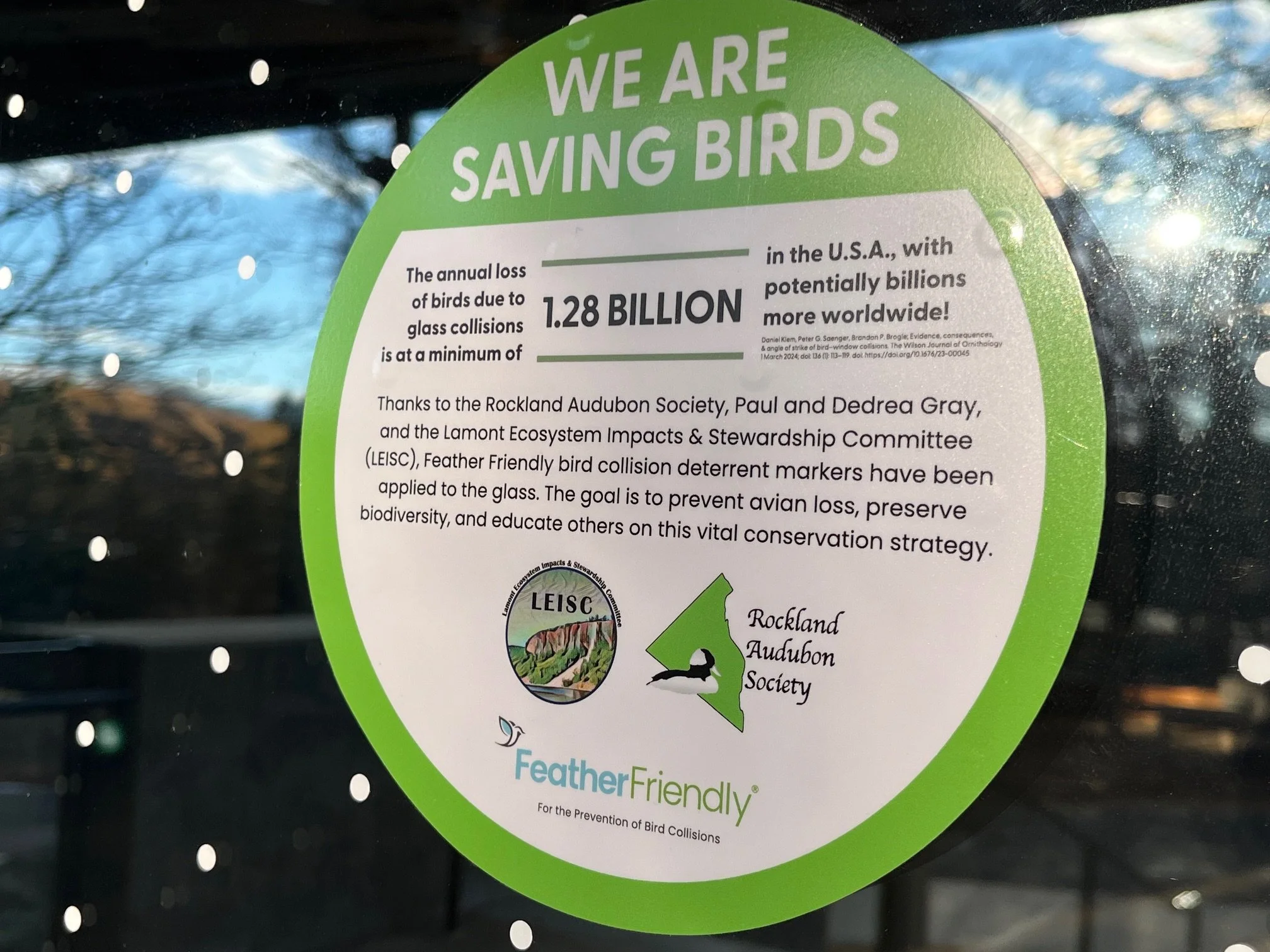
Photo by Sheean Haley
By working together, Lamont-Doherty and Rockland Audubon are showing how small, thoughtful changes to the built environment can make a meaningful difference for birds — especially during migration — while reinforcing the connection between science, stewardship, and place.
Bird-Safe Lighting: Protecting Migration at Scale
Lights Out for Birds on the Governor Mario M. Cuomo Bridge
Artificial night lighting is one of the leading causes of bird mortality during migration, disorienting birds as they travel along major waterways like the Hudson River. Working with transportation agencies and conservation partners, Rockland Audubon helped advance a seasonal lights-dimming program on the Governor Mario M. Cuomo Bridge to reduce unnecessary lighting during peak migration periods.
This regional-scale effort demonstrates how thoughtful operational changes to existing infrastructure can dramatically reduce risk to birds while maintaining public safety. The project has helped elevate bird-friendly lighting as a practical, science-based solution that can be applied to bridges, buildings, and municipal facilities across the region.
Download Press Release: Cuomo Bridge Lights Dimmed to Protect Migrating Birds
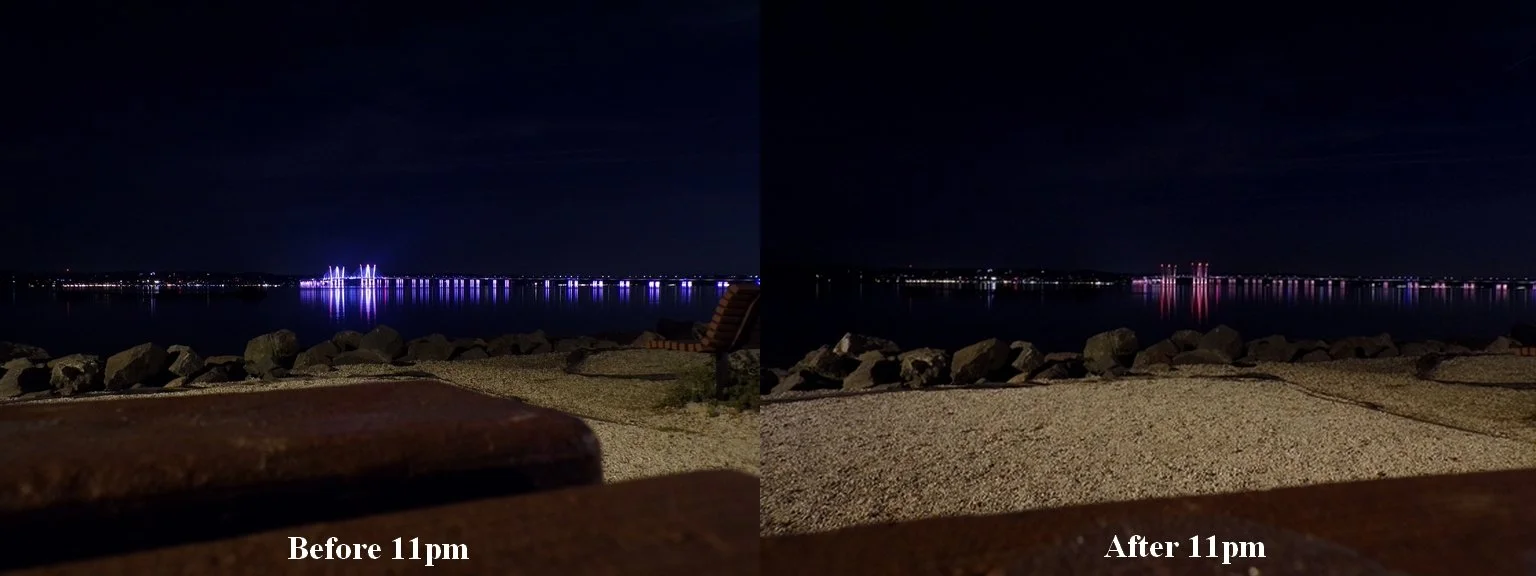
Before and after 11 pm — the Cuomo Bridge lights dim to protect migrating birds and reduce light pollution.